
Per- and polyfluoroalkyl substances (PFAS) are a growing environmental concern due to their widespread use, persistent chemical stability, and human health toxicity. In the U.S., PFAS have been detected in water, food, soil, and inevitably in wastewater and biosolids. Wastewater treatment plants passively receive PFAS from domestic sources (like household laundry, personal care products, and food packaging), industrial discharges, and landfill leachate. Because PFAS act like surfactants, they bind to wastewater solids during treatment and can accumulate in biosolids, creating management and land application challenges.
Biosolids PFAS regulations are rapidly evolving. In January 2025, the U.S. EPA released its Draft Sewage Sludge Risk Assessment for PFOA and PFOS, which is expected to inform national standards. In the interim, several states have restricted or limited land application of biosolids due to PFAS concerns. The increase in PFAS-related regulations is increasing the demand for sustainable, cost-effective technologies to remove PFAS from wastewater solids.
One emerging approach is microbial remediation, which aims to break the strong carbon-fluorine (C-F) bonds in PFAS by either stimulating native microbial communities or introducing specialized microbes with enzymes capable of interacting with PFAS. To date, both bacterial and fungal strains of microbes have been shown to degrade PFAS (Ball et al., Research Link). While information on the specific mechanisms of microbial PFAS degradation remains limited, it is hypothesized that microbes may do so through either of the pathways described below:
Direct Metabolism - Microbes may consume PFAS as an energy or nutrient source. Under anaerobic conditions, these microbes may remove fluorine atoms from PFAS compounds, weakening the molecule and making further degradation possible.
Co-Metabolism - While breaking down another substance, microbes may unintentionally produce enzymes capable of breaking the strong C-F bonds in PFAS.
While still in early development, microbial remediation could potentially offer a lower-energy alternative to high-temperature destruction methods like incineration or pyrolysis. Microbial remediation could be applied directly to the biosolids or in-situ to lands where biosolids have been applied.
Key Research Advancing the Field
Recent studies highlight the promise of microbial PFAS degradation. Below are a few recent research papers and their key findings. Although the field is still developing and additional evaluation has since identified some limitations, these studies represent an important early step in evaluating the feasibility and potential of this technology.
"Anaerobic degradation of perfluorooctanoic acid (PFOA) in biosolids by Acidimicrobium sp. strain A6" (Huang et al., 2022)
Key Finding: Up to 60% removal of PFOA and PFOS in 100 days under anaerobic conditions, marking the first strong evidence of a single bacterial strain capable of degrading PFAS in biosolids. Research Paper Link.
“Anaerobic biodegradation of perfluorooctane sulfonate (PFOS) and microbial community composition in soil amended with dechlorinating culture and chlorinated solvents” (Lorah et al., 2024)
Key Finding: A known dechlorinating microbe culture removed 46% of PFOS in 45 days from soil contaminated with fire-fighting foam, suggesting that existing remediation cultures can be adapted for PFAS treatment. Although the soil evaluated in this study was not amended with biosolids, this microbial culture may also have potential for PFAS removal in biosolids. Research Paper Link.
“Bacterial biodegradation of PFOA and PFOS using pure pseudomonas strains” (Chiriac et al., 2023).
Key Finding: Pseudomonas aeruginosa and P. putida transformed 28% of PFOA and 47% of PFOS within 96 hours, indicating the potential for fast bioaugmentation strategies. Although these strains were not evaluated in biosolids or soil matrices, they may have potential applicability for PFAS removal in wastewater or biosolids systems. Research Paper Link.
Looking Ahead: Potential Research Partnership
Microbial PFAS remediation is still an emerging field, but the progress so far is promising – particularly the potential for in-situ treatment that preserves soil health, without the high energy use of advanced thermal destruction technologies. However, key questions remain regarding feasibility, cost, scalability, and long-term performance, and further research is needed.
The BABC is closely watching this space and exploring a potential research partnership with BluumBio, a San Francisco Bay Area startup developing microbial PFAS remediation technology. BluumBio’s bench-scale studies (Figure 1) have shown promising removal of PFAS from primary effluent, mixed liquor, and biosolids, with removal of some key PFAS compounds in the 80 to 90% range. The BABC is considering supporting their next research step, which involves testing PFAS removal from biosolids at pilot-scale at a Bay Area wastewater treatment plant to assess whether these bench-scale results can be replicated at larger pilot-scale.
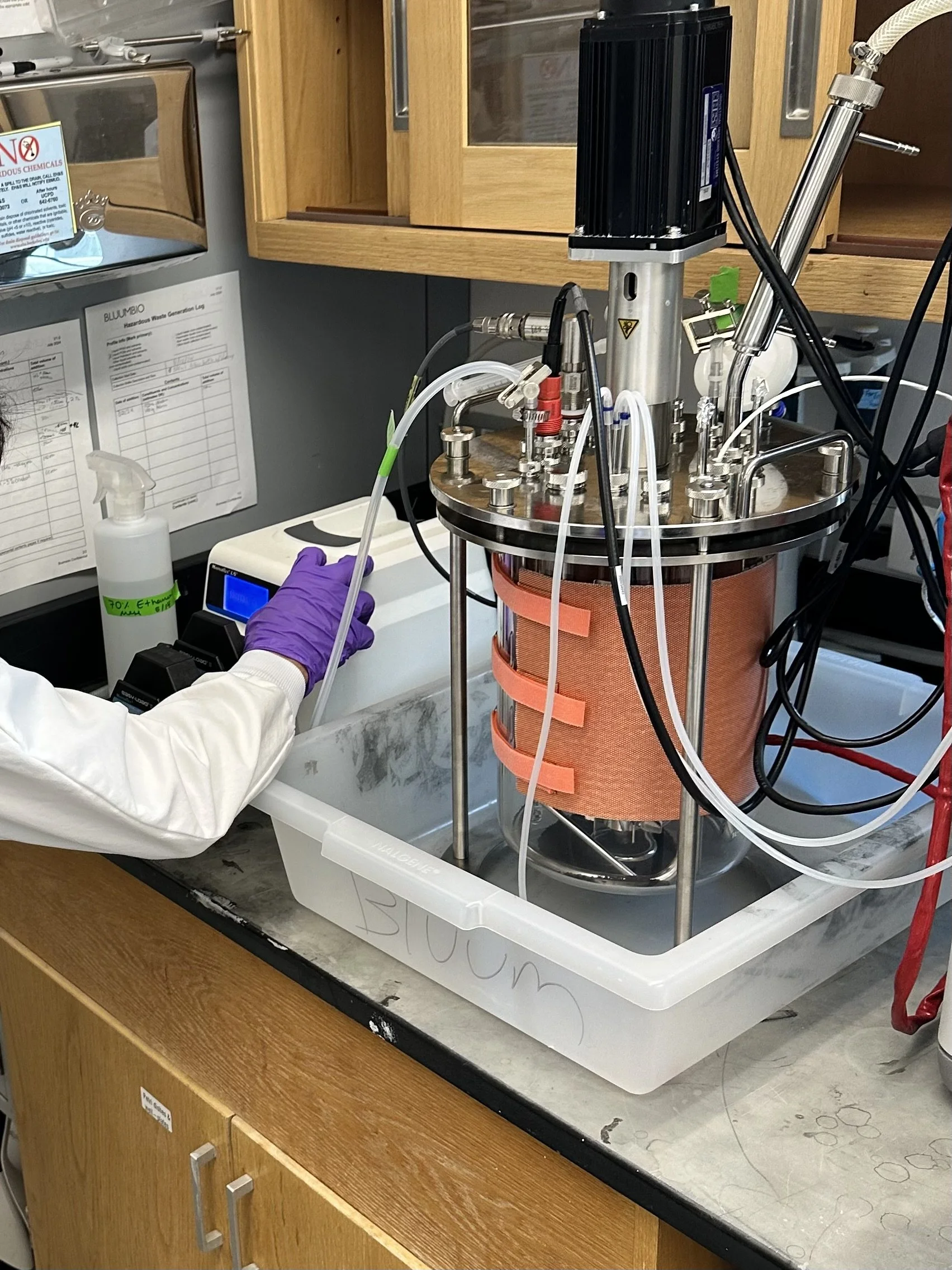
Figure 1 - BluumBio Bench Scale Testing